Why Refrigerator Organization Matters More Than You Think
A well-organized refrigerator does much more than improve the appearance of your kitchen—it helps protect food quality, reduce waste, and save money over time. When groceries are stored in designated areas, it’s easier to see what you already have, preventing duplicate purchases and forgotten leftovers that eventually spoil. Proper organization also allows cold air to circulate evenly, keeping foods at safer temperatures and extending their freshness. By following simple refrigerator organization tips and hacks, you can create a system that makes meal preparation faster, grocery shopping more efficient, and your refrigerator cleaner and easier to maintain every day.
Understand the Best Storage Zones in Your Refrigerator
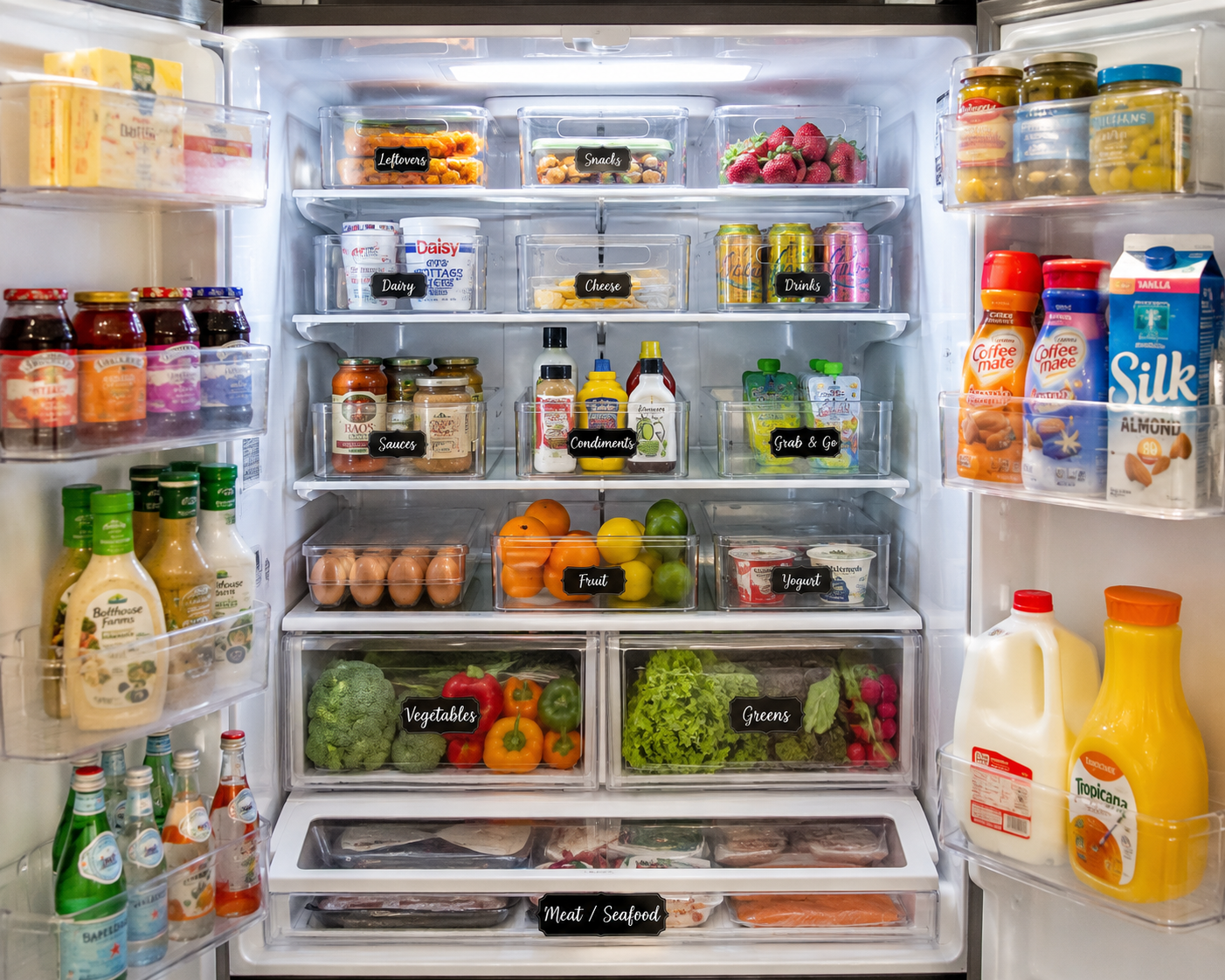
Every shelf and drawer inside your refrigerator has a specific purpose, and understanding these storage zones can significantly improve food freshness and safety. The top shelves usually maintain the most consistent temperature, making them ideal for ready-to-eat foods, leftovers, beverages, and dairy products like yogurt. Middle shelves work well for eggs and packaged foods, while the bottom shelf is the coldest part of the refrigerator and should always be reserved for raw meat, poultry, and seafood. Keeping raw proteins on the lowest shelf also helps prevent accidental drips from contaminating other foods.
The crisper drawers are designed to control humidity levels, making them the best place for fresh fruits and vegetables. Most refrigerators have separate humidity settings, allowing leafy greens and herbs to stay crisp while keeping fruits fresh for longer. The refrigerator door is the warmest area because it is opened frequently, so it is best suited for condiments, sauces, butter, and beverages rather than milk or eggs. Learning these storage zones is one of the most effective refrigerator organization tips and hacks because it not only maximizes freshness but also helps maintain food safety and reduces unnecessary waste.
Refrigerator Organization Tips and Hacks to Maximize Space
Making the most of your refrigerator space starts with organizing similar items together and using practical storage solutions. Store dairy products on one shelf, beverages on another, and dedicate separate bins for snacks, fruits, and vegetables so everything is easy to find. Clear stackable containers, labeled bins, and a lazy Susan for condiments help utilize every inch of available space while preventing clutter. Remove bulky packaging whenever possible, keep frequently used items at eye level, and avoid overfilling the refrigerator so cold air can circulate freely. These simple refrigerator organization tips and hacks create a cleaner, more functional refrigerator that keeps food visible, accessible, and fresher for longer.
Smart Food Storage Habits That Keep Food Fresher Longer
Keeping food fresh begins with storing it correctly from the moment you bring groceries home. Wash fruits and vegetables only when you’re ready to use them, as excess moisture can speed up spoilage. Store leftovers in airtight containers and label them with the date so they are easy to identify and use before they expire. Following the “First In, First Out” (FIFO) method—placing older items in front and newer purchases behind them—helps reduce food waste and ensures nothing gets forgotten at the back of the refrigerator.
Temperature also plays a major role in preserving food quality. Keep your refrigerator set between 35°F and 38°F (1.7°C to 3.3°C) and avoid overcrowding shelves, which can block proper airflow. Separate fruits that produce ethylene gas, such as apples and bananas, from vegetables that are sensitive to it, like broccoli and leafy greens, to prevent premature ripening. Adopting these smart storage habits alongside effective refrigerator organization tips and hacks can extend the shelf life of your groceries, maintain better flavor, and help you save money by reducing unnecessary waste.
Common Refrigerator Organization Mistakes to Avoid
Many people unknowingly make mistakes that reduce the efficiency of their refrigerator and shorten the lifespan of their food. One of the most common is overcrowding the shelves, which restricts airflow and causes uneven cooling. Other mistakes include storing raw meat above ready-to-eat foods, keeping milk and eggs in the refrigerator door where temperatures fluctuate, ignoring expired items, and leaving leftovers in unlabeled containers. Avoiding these errors and consistently applying practical refrigerator organization tips and hacks will help maintain a cleaner refrigerator, improve food safety, and ensure your groceries stay fresh for as long as possible.
Essential Refrigerator Organizers Worth Using
The right storage accessories can make a significant difference in keeping your refrigerator neat and functional. Clear plastic bins are ideal for grouping similar foods such as dairy products, snacks, beverages, or deli items, making everything easier to locate. Stackable containers help maximize vertical space, while drawer dividers keep fruits and vegetables separated to prevent bruising. A rotating lazy Susan is especially useful for condiments, sauces, and small jars, allowing you to reach items at the back without moving everything in front.
Choosing organizers that are easy to clean and fit your refrigerator’s dimensions will help maintain an efficient storage system over time. Reusable airtight containers keep leftovers fresh and reduce odors, while labels make it simple for everyone in the household to know where items belong. Egg holders, beverage racks, and freezer bins can further improve organization by preventing clutter and making better use of available space. Investing in a few practical organizers, combined with effective refrigerator organization tips and hacks, creates a cleaner refrigerator that is easier to manage and more enjoyable to use every day.
Weekly Maintenance Routine for a Clean and Fresh Refrigerator
A simple weekly maintenance routine is the key to keeping your refrigerator organized and hygienic throughout the year. Set aside a few minutes each week to throw away expired foods, wipe up spills, and check the freshness of fruits, vegetables, and leftovers. Return items to their designated zones, refill storage bins neatly, and rotate older groceries to the front so they are used first. Cleaning shelves and drawers regularly also helps prevent odors and bacteria buildup. By making these small tasks part of your routine, your refrigerator organization tips and hacks will remain effective, ensuring your refrigerator stays clean, fresh, and ready for every grocery trip.
Conclusion
Keeping your refrigerator organized is one of the simplest ways to improve your kitchen routine while reducing food waste and saving money. By understanding the correct storage zones, using practical organizers, and following smart food storage habits, you can create a refrigerator that stays clean, efficient, and easy to use. Small changes, such as grouping similar items together and rotating older groceries to the front, make a noticeable difference in preserving freshness and preventing unnecessary waste.
The best refrigerator organization tips and hacks are easy to maintain and require only a few minutes each week. With a consistent cleaning routine and thoughtful organization, you’ll spend less time searching for ingredients, enjoy fresher food, and keep your refrigerator looking tidy all year long. Whether you have a compact fridge or a large family-sized model, these simple strategies will help you make the most of every shelf and drawer.
FAQs
1. What are the best refrigerator organization tips and hacks?
The best tips include using clear storage bins, grouping similar foods together, storing raw meat on the bottom shelf, labeling leftovers, and avoiding overcrowding so cold air can circulate properly.
2. How often should I organize my refrigerator?
A quick organization and cleaning session once a week is ideal. Remove expired food, wipe up spills, and rearrange items to keep everything fresh and easy to find.
3. Where should fruits and vegetables be stored in the refrigerator?
Most fruits and vegetables should be stored in the crisper drawers, which are designed to maintain the proper humidity levels and help keep produce fresh for longer.
4. Why is refrigerator organization important?
Proper refrigerator organization improves food safety, reduces waste, extends the freshness of groceries, saves money, and makes meal preparation more efficient.