What Are Indie Hackers?
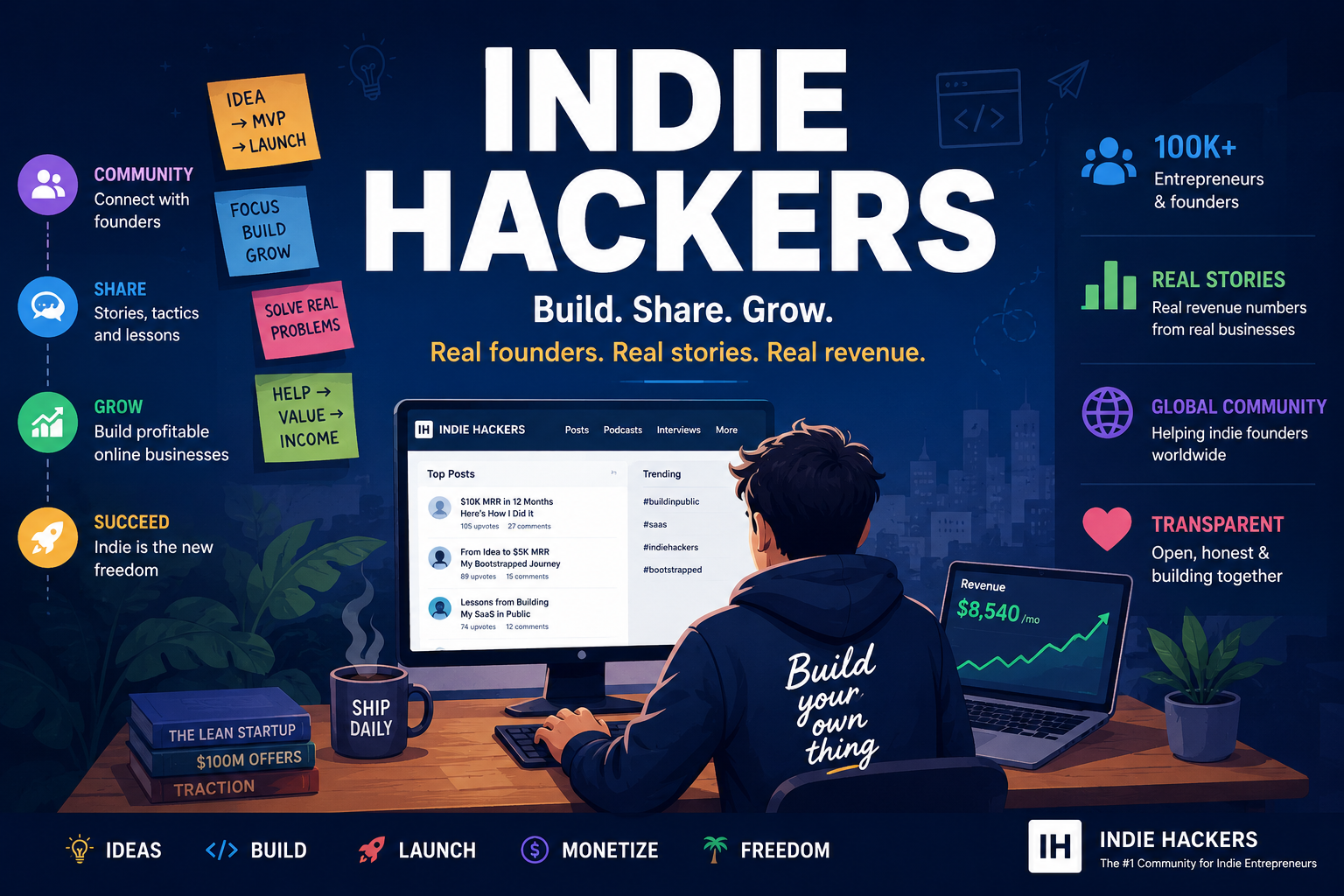
Indie hackers are entrepreneurs who build and grow businesses independently, typically without relying on venture capital or large external investments. Instead of focusing on rapid expansion at all costs, they prioritize creating useful products, generating revenue early, and maintaining full control of their companies. Many indie hackers operate online businesses such as SaaS platforms, mobile apps, content websites, and digital products, often starting as solo founders or small teams. Their goal is to achieve sustainable profitability by solving real problems for customers, proving that successful startups can be built through creativity, persistence, and customer-focused innovation rather than outside funding.
Why Bootstrapping Is the Preferred Path
For many indie hackers, bootstrapping is the preferred way to build a startup because it allows them to retain complete ownership and decision-making authority. Without investors influencing business strategies, founders can focus on creating products that genuinely serve their customers rather than chasing aggressive growth targets. This freedom enables entrepreneurs to experiment, make adjustments based on user feedback, and develop their businesses at a sustainable pace. As a result, many bootstrapped startups build stronger relationships with customers and create more stable foundations for long-term success.
Another reason bootstrapping appeals to indie hackers is the financial discipline it encourages. Since resources are often limited, founders learn to prioritize essential features, manage expenses carefully, and focus on activities that directly contribute to revenue. This approach reduces unnecessary spending and helps businesses become profitable sooner. While growth may be slower compared to venture-backed startups, bootstrapped companies often develop healthier business models because they depend on real customer demand rather than continuous rounds of external funding.
Solving Small Problems for Specific Audiences
One of the most effective strategies used by indie hackers is focusing on small but meaningful problems that affect a specific group of people. Instead of trying to compete with large companies in broad markets, they identify niche challenges that are often overlooked. By understanding the needs, frustrations, and goals of a particular audience, founders can create targeted solutions that provide immediate value. This focused approach makes it easier to attract customers because the product is designed to solve a clear and relevant problem.
Targeting a specific audience also helps indie hackers market their products more efficiently. When founders know exactly who their ideal customers are, they can craft messages that resonate with those users and reach them through the right channels. A niche product may serve fewer people overall, but it often experiences higher customer satisfaction and loyalty because it addresses a problem more effectively than general-purpose alternatives. Over time, these strong customer relationships can lead to referrals, recurring revenue, and steady business growth.
Building Minimum Viable Products Quickly
Successful indie hackers understand the importance of launching quickly with a minimum viable product (MVP) rather than spending months or years building a perfect solution. An MVP includes only the essential features needed to solve a customer’s core problem, allowing founders to test their ideas in the real market and gather valuable feedback. By releasing products early, indie hackers can validate demand, identify improvements, and avoid wasting time and resources on features that users may never need. This lean approach helps them iterate faster and build products that are closely aligned with customer expectations.
Revenue First, Funding Later
A defining characteristic of indie hackers is their focus on generating revenue as early as possible. Rather than seeking investment before proving their business model, they aim to attract paying customers from the beginning. Early revenue validates that people are willing to pay for the solution being offered, which reduces risk and provides valuable insight into customer needs. This customer-funded approach allows founders to reinvest earnings into product development, marketing, and business growth without giving up ownership.
Prioritizing revenue also encourages indie hackers to build products that deliver real value. Since their success depends directly on customer satisfaction and retention, they must continually improve their offerings and maintain strong relationships with users. Over time, consistent revenue can provide the financial stability needed to scale a business organically. If outside funding becomes necessary in the future, founders are often in a stronger position because they already have a proven product, active customers, and a sustainable business model.
Leveraging Online Communities for Growth
Online communities play a crucial role in the success of many indie hackers. Platforms dedicated to entrepreneurs, makers, and startup founders provide opportunities to share progress, gather feedback, validate ideas, and connect with potential customers. By actively participating in discussions, showcasing product updates, and helping others solve problems, indie hackers can build credibility and attract an audience without spending heavily on advertising. These communities often become valuable sources of support, partnerships, and early adopters who contribute to the growth of a new business.
Real Examples of Successful Indie Hackers
Many successful indie hackers have demonstrated that profitable businesses can be built without massive funding. Founders of niche software tools, productivity applications, newsletters, and digital services have grown their products from simple side projects into businesses generating substantial recurring revenue. Their success stories often share common themes, including solving a specific problem, launching early, listening closely to customers, and improving products based on real-world feedback. These examples continue to inspire aspiring entrepreneurs by showing that determination,
Common Challenges and How Founders Overcome Them
Despite their success, indie hackers face numerous challenges while building businesses independently. Limited budgets, lack of brand recognition, and the responsibility of managing multiple roles can make the journey difficult. Many founders handle product development, marketing, customer support, and operations on their own, which can lead to stress and slow progress. Additionally, competing against larger companies with greater resources often requires creativity and persistence to stand out in the market.
To overcome these obstacles, successful indie hackers focus on efficiency, continuous learning, and customer feedback. They automate repetitive tasks, use affordable tools, and prioritize activities that produce the greatest impact. Many also rely on online communities and networking opportunities to gain advice, share experiences, and find solutions to common problems. By staying adaptable and maintaining a long-term perspective, founders can navigate challenges more effectively and continue growing their businesses despite limited resources.
The Future of the Indie Hacker Movement
The future of the indie hackers movement looks promising as technology continues to lower the barriers to starting and growing a business. With the rise of artificial intelligence, no-code development platforms, remote work, and affordable digital tools, entrepreneurs can build products faster and reach global audiences with minimal upfront investment. More founders are choosing sustainable, customer-funded businesses over traditional venture-backed models, valuing independence, flexibility, and long-term profitability. As these trends continue, the indie hacker community is expected to grow, creating even more opportunities for individuals to launch successful startups on their own terms.
Conclusion
The success of indie hackers proves that building a profitable startup does not require venture capital. By focusing on solving specific problems, launching minimum viable products quickly, generating revenue early, and engaging with supportive online communities, independent founders can create sustainable businesses with full ownership and control. While challenges such as limited resources and competition exist, the growing availability of digital tools and global marketplaces continues to make entrepreneurship more accessible than ever. For aspiring founders, the indie hacker approach offers a practical and proven path to turning ideas into profitable ventures.
FAQs
What is an indie hacker?
An indie hacker is an entrepreneur who builds and grows a business independently, usually without venture capital funding, while focusing on profitability and long-term sustainability.
Do indie hackers need investors?
No. Most indie hackers bootstrap their businesses using personal savings, customer revenue, or side income instead of seeking outside investment.
What types of businesses do indie hackers create?
Indie hackers commonly build SaaS products, mobile apps, online tools, newsletters, content websites, and other digital businesses.
Can an indie hacker build a successful startup alone?
Yes. Many successful indie hackers start as solo founders and grow profitable businesses by solving specific customer problems and continuously improving their products.