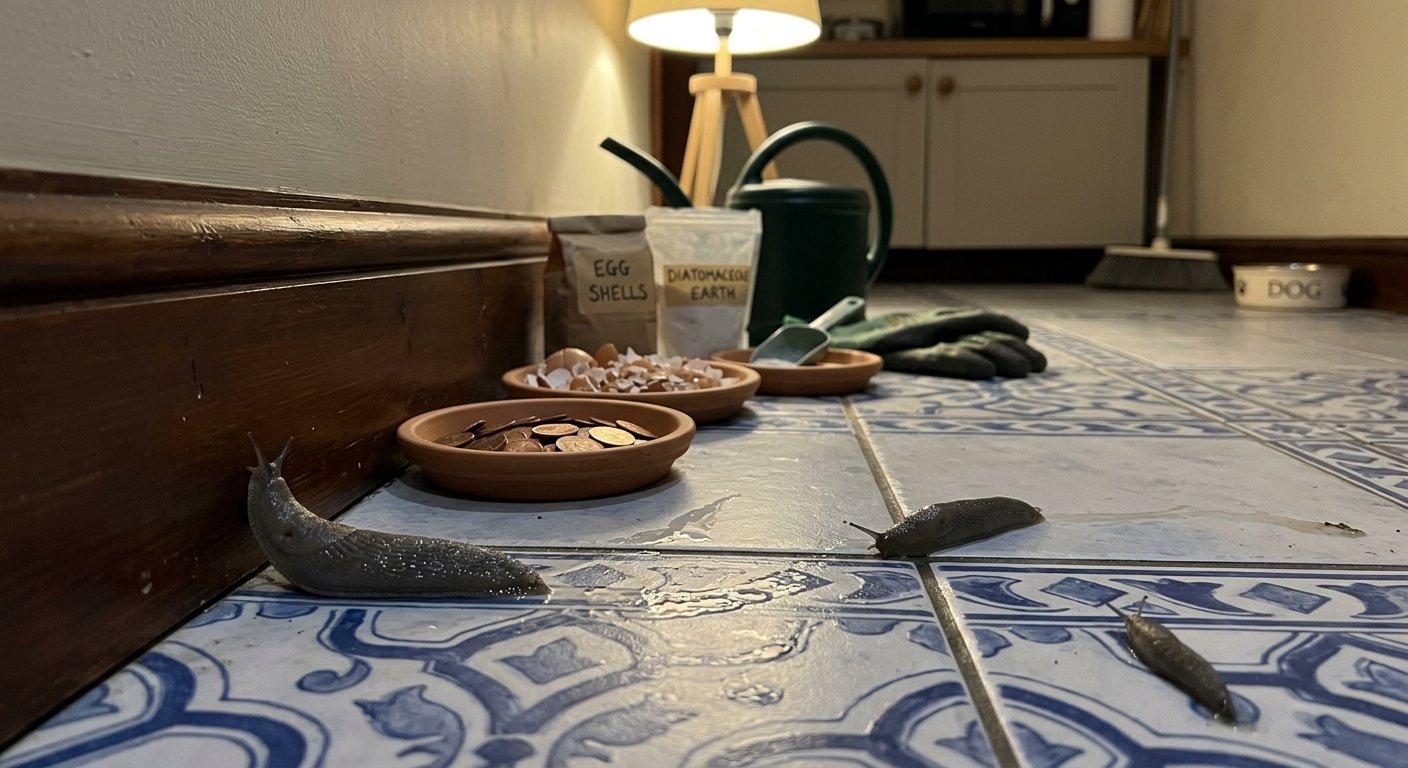
Slugs are usually associated with gardens, damp soil, and outdoor plants, so finding one inside your home can be unpleasant and confusing. However, slugs can enter houses when outdoor conditions are wet, when there are gaps around doors or windows, or when they are attracted to cool, damp areas. If you have noticed slimy trails across your floor, walls, or kitchen area, you may be wondering how do you get rid of slugs indoors effectively.
The good news is that indoor slugs can usually be dealt with without complicated pest-control methods. The most important steps are to remove the slugs you can see, clean away their trails, identify how they entered, and reduce moisture around the property. Preventing future entry is often more important than simply removing the slugs currently inside.
Why Do Slugs Come Inside the House?
Slugs need moisture to survive, which means they are naturally attracted to damp and humid environments. During periods of heavy rain, they may leave gardens and other outdoor habitats and search for sheltered places. A house can provide protection from drying conditions, especially around kitchens, bathrooms, utility rooms, garages, basements, and other poorly ventilated areas.
Small gaps can also make it surprisingly easy for slugs to enter. They may travel underneath doors, through cracks around pipes, gaps around windows, ventilation openings, or damaged seals. Vegetation growing close to walls can provide a sheltered route from the garden toward the house.
If you repeatedly find slugs indoors, the problem may therefore be less about the individual slugs and more about where they are entering and why the area is attractive to them.
Remove Slugs You Find Indoors
The first step is straightforward: remove any slugs that are already inside. You can use a piece of cardboard, paper towel, or another disposable material to pick them up without touching them directly.
Take the slug outside and place it in a suitable area away from your home’s entrances. After removal, clean the surface where the slug traveled. Slugs leave behind a slippery mucus trail, and removing this residue helps keep floors and surfaces clean.
Avoid crushing slugs on carpets, furniture, or other difficult-to-clean surfaces because the mucus can be unpleasant to remove. A simple physical removal method is usually sufficient when only a few slugs have entered the house.
Find Their Entry Point
One of the most useful things you can do is investigate where the slugs are coming from. If you remove several slugs but do nothing about the entry route, more may appear later.
Look carefully around:
- Exterior doors and door frames
- Window frames and damaged seals
- Cracks in walls or floors
- Gaps around plumbing pipes
- Utility entrances
- Air vents
- Garage doors
- Basement openings
- Areas where walls meet flooring
Pay particular attention to areas where you have noticed slime trails. Following these trails can sometimes help identify the direction from which the slug entered.
Once you identify a gap, seal it appropriately. Weather stripping can help around doors, while suitable sealants can be useful for small cracks and gaps around fixed surfaces.
Reduce Dampness and Humidity
Because moisture is one of the biggest attractions for slugs, reducing indoor dampness can make your home less appealing to them.
Check for leaking pipes, dripping taps, condensation, or water accumulating near walls and floors. Bathrooms and kitchens should have adequate ventilation, particularly after showers or when cooking.
You can also improve airflow by opening windows when outdoor conditions are appropriate or using an extractor fan. If a room regularly feels damp, a dehumidifier may also help reduce humidity.
Don’t forget less obvious areas. Slugs may appear around washing machines, sinks, drains, garages, or storage areas where moisture remains unnoticed.
Clean Slug Trails Thoroughly
After removing slugs, clean the surfaces where they have traveled. Their trails can appear as shiny or silvery lines across floors, walls, and other surfaces.
For hard surfaces, use an appropriate household cleaner and follow the product instructions. On delicate materials, test cleaning products in an inconspicuous area first.
Cleaning is useful for hygiene and also helps you determine whether new slime trails are appearing. If you clean an area and later find fresh trails, you know that another slug may have entered or that an existing slug remains nearby.
Check the Garden Around Your Home
Sometimes the solution to an indoor slug problem starts outside. Slugs commonly live in damp vegetation, leaf litter, compost, soil, and other sheltered places.
Inspect the area immediately outside the walls where you are finding slugs. Move piles of wet leaves, excessive vegetation, boards, containers, and other objects that create dark, damp hiding places close to entrances.
Keeping plants and dense vegetation from directly touching walls can also reduce sheltered routes toward the building. However, outdoor habitats should be managed thoughtfully because slugs are part of the wider ecosystem and many methods of control can affect other organisms.
Try Simple Non-Chemical Prevention
For a small indoor problem, physical prevention is usually preferable to immediately reaching for strong chemical products.
Start with basic measures such as repairing door seals, closing gaps, improving ventilation, fixing leaks, and keeping damp storage areas dry. These actions address the environmental conditions that allow slugs to enter and remain inside.
Some people use salt against slugs, but deliberately spreading salt around your home is not a particularly good general solution. Salt can damage surfaces, plants, soil, and other organisms. It is better to focus on removal, cleaning, moisture reduction, and exclusion.
Should You Use Slug Pellets Indoors?
Slug-control pellets designed for gardens should not automatically be used inside the home. Products have specific instructions, application areas, and safety requirements, and some formulations can pose risks to pets, children, or other animals if misused.
Always read the product label before using any pest-control product. Do not assume that a product intended for outdoor garden use is appropriate for kitchens, bedrooms, living spaces, or other indoor areas.
For a small number of indoor slugs, removing them and preventing further entry is generally a more appropriate first response than placing pesticides around the house.
How to Stop Slugs From Returning
Once you have removed the visible slugs, concentrate on prevention. This is especially important if you notice them repeatedly.
Keep exterior doors properly sealed and repair damaged weather stripping. Check windows for gaps and make sure frames are in good condition. Inspect areas around pipes and cables for openings that may provide access.
Outside, keep damp organic material from accumulating immediately against the building. Check gutters and drainage systems as well, because persistent water around the property can contribute to damp conditions.
Regular inspection is useful after periods of heavy rain. If slugs suddenly appear indoors following wet weather, check the exterior of the property for new moisture or entry problems.
When Should You Contact Pest Control?
Occasionally, repeated indoor slug sightings may indicate a more persistent moisture or structural problem. If you regularly find multiple slugs despite sealing obvious gaps and reducing dampness, professional assistance may be worthwhile.
A pest-control professional can help investigate recurring activity and identify possible entry routes. If the issue appears to involve water damage, leaks, or structural gaps, you may also need a plumber, builder, or other appropriate professional.
Professional help is particularly useful when the source cannot be identified or when slugs are appearing in several different rooms.
Common Mistakes to Avoid
One common mistake is simply removing every slug without investigating how they entered. This can result in a cycle where new slugs continue to appear.
Another mistake is ignoring moisture. A damp environment can make the property more attractive to slugs and may also contribute to other household problems, including mold and unpleasant odors.
Using excessive chemicals is another unnecessary approach for a minor indoor problem. Before using pesticides, consider whether physical removal, sealing gaps, and moisture control can solve the issue.
Finally, don’t assume that one slug automatically means there is a major infestation. An occasional indoor slug can happen, particularly during wet weather. Repeated sightings are more useful as a sign that you should investigate entry points and damp areas.
Frequently Asked Questions
How do you get rid of slugs indoors quickly?
Remove the slug physically, clean its trail, and inspect nearby areas for additional slugs. Then look for gaps, damp areas, or other conditions that could allow more slugs to enter.
Why am I finding slugs in my house at night?
Slugs are more active in cool, damp conditions and may move indoors through small openings. Nighttime can therefore be when you notice them more easily, especially after wet weather.
Does salt kill slugs?
Salt can harm and kill slugs, but using it around the home is generally not recommended as a routine control method because it can damage plants, soil, and surfaces and may affect other organisms.
Can slugs come through drains?
Slugs may be associated with damp areas around plumbing and drains, but repeated sightings should prompt an inspection of the surrounding area and possible entry points rather than assuming the drain itself is the source.
Are indoor slugs dangerous?
Slugs are generally more of a nuisance than a household danger. However, avoid handling them unnecessarily and maintain good hygiene by cleaning surfaces where they have traveled.
Final Thoughts
If you are asking how do you get rid of slugs indoors, the most practical approach is to think beyond simply removing the slug you can see. Physically remove indoor slugs, clean their trails, identify possible entry points, reduce moisture, and inspect the outdoor area around your home.
For occasional sightings, these simple measures may be all that is needed. If slugs continue appearing despite your efforts, investigate persistent dampness or hidden entry routes and consider professional help. The key to long-term control is usually prevention rather than repeatedly dealing with individual slugs.