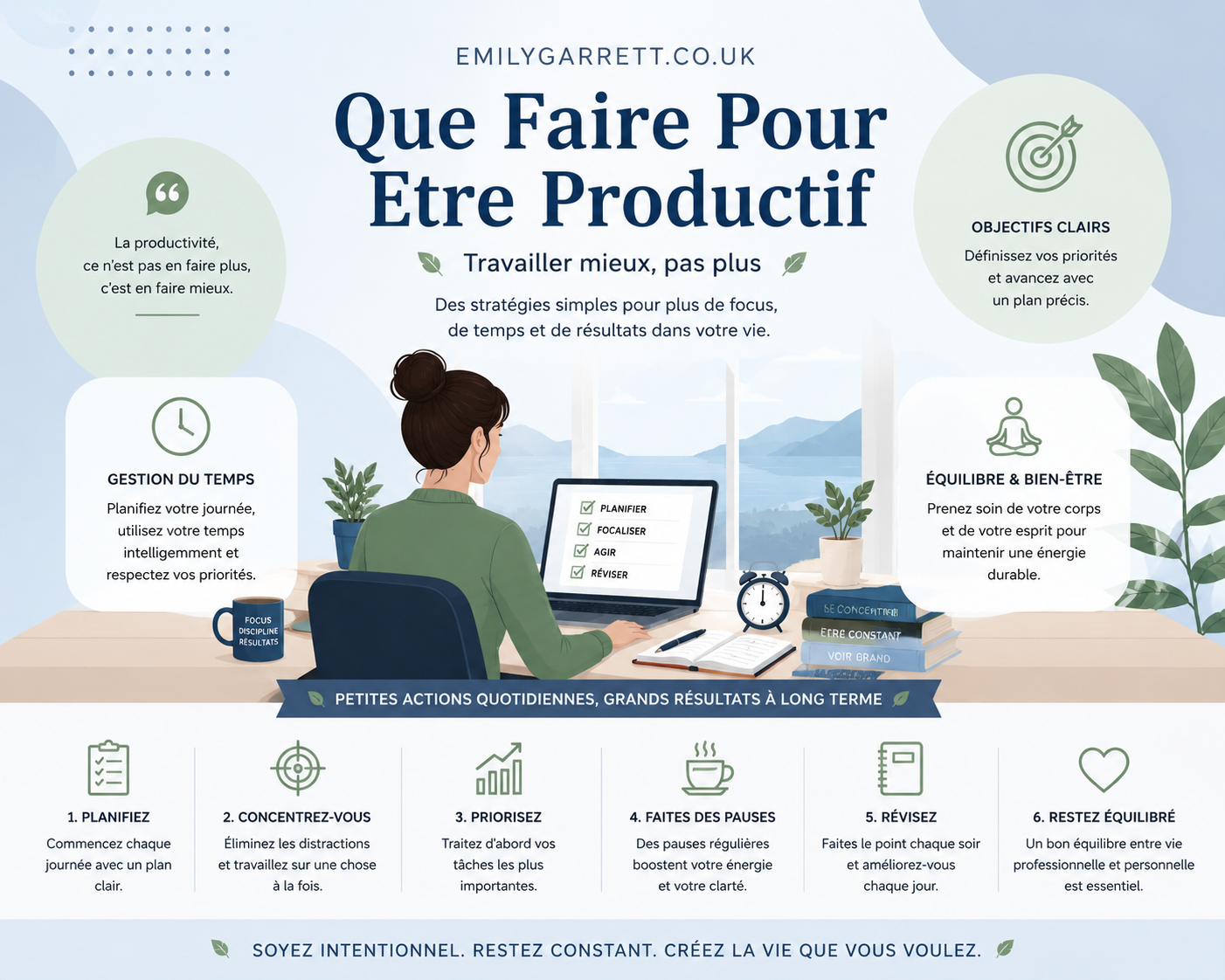
What Does “Que Faire Pour Etre Productif” Really Mean?
The phrase que faire pour etre productif translates from French as “what should I do to be productive?” It reflects a common desire to accomplish more while making better use of time and energy. Being productive doesn’t mean staying busy every minute or working long hours without breaks. Instead, it means focusing on the tasks that matter most, setting clear priorities, and completing them efficiently. True productivity is about achieving meaningful results with less stress by developing smart habits, minimizing distractions, and managing your time effectively.
Why Productivity Matters More Than Being Busy
Many people mistake being busy for being productive, but the two are not the same. A packed schedule filled with meetings, emails, and small tasks may create the feeling of accomplishment, yet it doesn’t always lead to meaningful progress. Productivity is measured by the value of what you complete, not by the number of hours you spend working. Focusing on high-impact tasks allows you to make steady progress toward your goals while reducing unnecessary stress and avoiding burnout.
When you prioritize productivity over constant activity, you gain better control of your time and improve your overall well-being. Working with a clear plan helps you make smarter decisions, maintain concentration, and achieve better results in less time. Over the long term, productive habits also create a healthier work-life balance, giving you more time for personal growth, family, hobbies, and rest without sacrificing your professional or academic success.
8 Practical Ways to Be More Productive Every Day
Improving productivity starts with small, consistent actions that become daily habits. Begin by planning your day and identifying your three most important tasks before you start working. Break large projects into smaller, manageable steps, and tackle the most challenging work when your energy is highest. Reduce distractions by silencing unnecessary notifications, keeping your workspace organized, and setting dedicated focus periods. Taking short breaks, staying hydrated, and getting enough sleep also help maintain concentration throughout the day. Finally, review your progress at the end of each day to celebrate achievements, identify areas for improvement, and prepare a clear plan for tomorrow.
Common Productivity Mistakes to Avoid
One of the biggest productivity mistakes is trying to do too many things at once. Multitasking may seem efficient, but constantly switching between tasks reduces focus, increases mistakes, and often takes more time to complete important work. Another common issue is procrastination, where difficult or high-priority tasks are delayed in favor of easier activities. Without a clear plan or realistic deadlines, it’s easy to become overwhelmed and lose momentum throughout the day.
Another mistake is ignoring the importance of rest and personal well-being. Working for long periods without breaks can lead to mental fatigue, lower creativity, and reduced performance. Many people also spend too much time checking emails, social media, or notifications, which interrupts concentration and makes it harder to return to deep work. Building healthy routines, setting boundaries for distractions, and taking regular breaks can help you avoid these pitfalls and maintain consistent productivity over time.
Productivity Tools and Techniques That Actually Work
The right tools and techniques can make staying productive much easier when used consistently. A simple digital calendar helps organize appointments and deadlines, while task management apps keep projects and daily to-do lists in one place. Time management methods such as the Pomodoro Technique, time blocking, and the Eisenhower Matrix can improve focus by helping you prioritize important work and reduce distractions. Whether you prefer digital apps or a traditional paper planner, the best productivity system is one that fits your routine and encourages you to stay organized every day.
Real-Life Example: A Simple Productive Daily Routine
Imagine a freelance graphic designer who often struggled to meet deadlines because of constant interruptions and poor planning. Instead of starting the day by checking emails and social media, they began creating a short to-do list the night before, identifying the three most important tasks for the next day. They worked on the most challenging project first during their peak energy hours, used 25-minute focus sessions with short breaks, and turned off unnecessary notifications. Within a few weeks, they noticed they were finishing projects earlier and feeling less stressed at the end of each workday.
This simple routine demonstrates that productivity is built through consistent habits rather than dramatic changes. By planning ahead, focusing on one task at a time, and reviewing completed work before ending the day, anyone can improve their efficiency. The exact routine may differ depending on your lifestyle or profession, but the core principles—clear priorities, focused work, and regular breaks—remain effective for students, employees, entrepreneurs, and freelancers alike.
Final Thoughts: Building Long-Term Productive Habits
Mastering que faire pour etre productif is not about finding a single secret technique but about building habits that support consistent progress over time. By setting clear priorities, planning your day, minimizing distractions, and taking regular breaks, you can accomplish more without feeling overwhelmed. Remember that productivity is a long-term practice, not a race. Small improvements made every day will gradually lead to better focus, greater efficiency, and lasting success in both your personal and professional life.
FAQs
1. What does “que faire pour etre productif” mean?
It is a French phrase that means “what should I do to be productive?” and refers to finding practical ways to improve efficiency and achieve more in less time.
2. What is the best way to become more productive?
The best approach is to plan your day, prioritize important tasks, eliminate distractions, and maintain consistent daily habits.
3. Why is multitasking bad for productivity?
Multitasking divides your attention, increases errors, and often makes tasks take longer than focusing on one activity at a time.
4. Which productivity technique is most effective?
Popular methods such as the Pomodoro Technique, time blocking, and the Eisenhower Matrix are all effective, but the best choice depends on your work style and daily routine.