What Does Six Months From Today Mean?
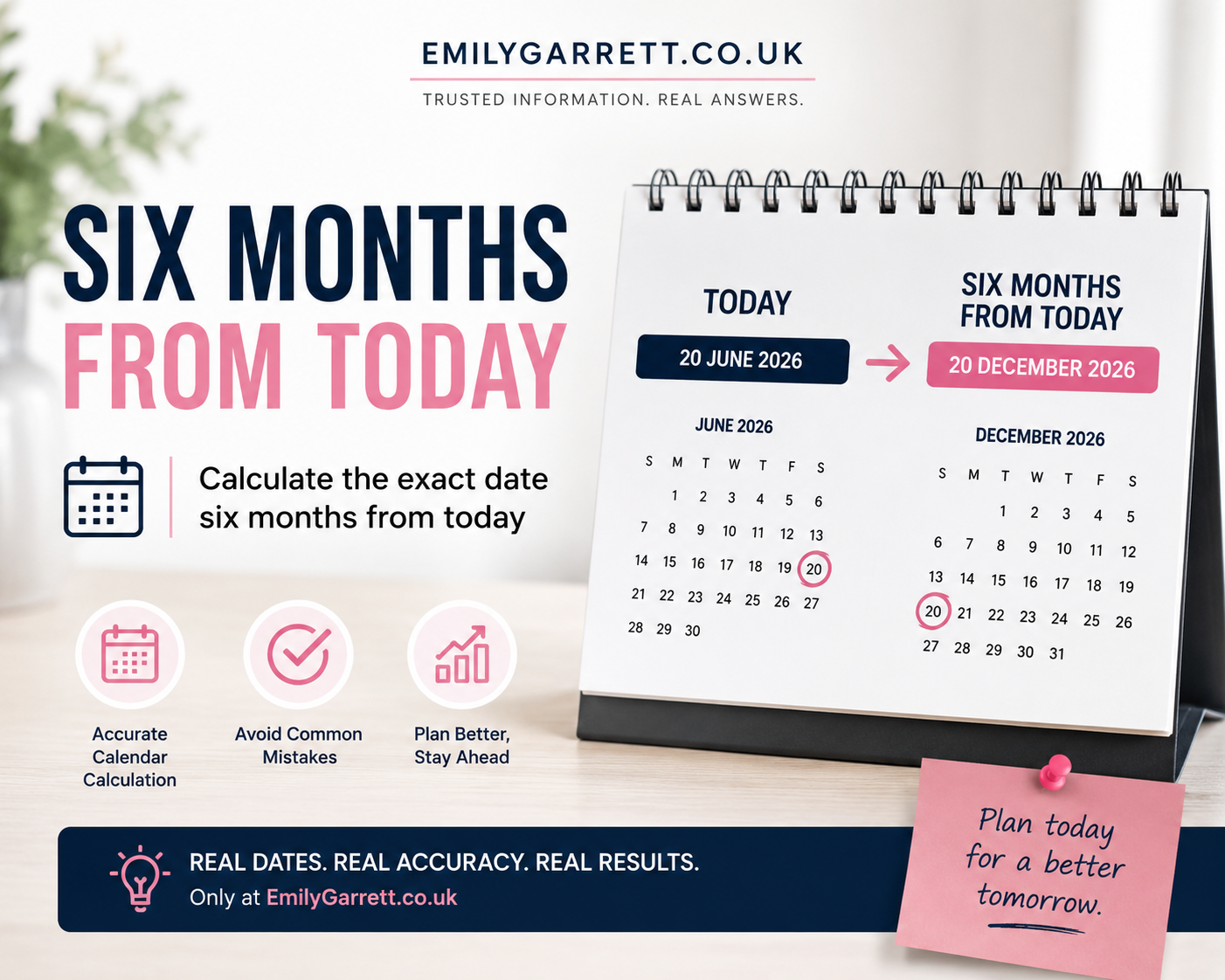
The phrase six months from today refers to a date that falls exactly six calendar months after the current date. Rather than counting a fixed number of days, most people, businesses, and organizations calculate it by moving forward six months on the calendar while keeping the same day of the month whenever possible. For example, if today is June 20, 2026, then six months from today would be December 20, 2026. This method is commonly used for contracts, subscription renewals, financial planning, project deadlines, and personal scheduling because it follows standard calendar conventions and provides a clear, consistent way to determine future dates.
Exact Date: What Is Six Months From Today?
When calculating six months from today, the most widely accepted method is to add six calendar months to the current date. If today is June 20, 2026, the date six months later is December 20, 2026. This approach is used because calendar months vary in length, ranging from 28 to 31 days, making a simple day-count calculation less reliable for many practical purposes. By using calendar months, the resulting date remains aligned with the same numerical day whenever possible.
Knowing the exact date six months ahead can be useful in many situations, such as planning travel, tracking business milestones, scheduling medical appointments, or managing legal agreements. Many online date calculators and calendar tools follow this same method, ensuring consistency across different applications. Understanding the exact date helps avoid confusion and ensures that important deadlines and commitments are accurately planned well in advance.
How Calendar Month Calculations Work
Calendar month calculations work by moving forward a specified number of months while keeping the same day of the month whenever possible. For example, adding six months to June 20 results in December 20 because both months contain at least 20 days. If the target month does not have the same day number, such as moving from August 31 to a month with fewer days, the calculation typically adjusts to the last valid day of that month. This method is widely used in business, legal, financial, and personal planning because it follows the structure of the calendar rather than relying on a fixed number of days.
Six Months vs. 180 Days: What’s the Difference?
Many people assume that six months from today is the same as adding 180 days to the current date, but this is not always correct. Calendar months have different lengths, with some containing 30 days, others 31 days, and February having 28 or 29 days. Because of these variations, six calendar months can equal more or less than 180 days depending on the starting date. This difference becomes especially noticeable when calculations span multiple months with varying numbers of days.
For most official purposes, such as contracts, loan agreements, subscriptions, and project timelines, six calendar months are used instead of a fixed day count. Calendar-based calculations provide consistency and align with how dates are organized in everyday life. While adding 180 days may be useful for certain technical or scientific calculations, using calendar months is generally the preferred method when determining a date that falls six months in the future.
Real-Life Examples of Six-Month Date Calculations
Understanding six months from today becomes easier when applied to real-life situations. For example, if someone starts a six-month gym membership on June 20, 2026, the membership would typically expire on December 20, 2026. Similarly, a business that sets a project deadline six months from a starting date would count forward by calendar months rather than a fixed number of days. This method is also commonly used for visa validity periods, subscription renewals, savings goals, and personal milestones, making calendar-based date calculations an important part of everyday planning.
Common Mistakes When Calculating Future Dates
One of the most common mistakes people make when calculating future dates is assuming that every month has the same number of days. This often leads to incorrect results when someone simply multiplies the number of months by 30 days or uses a rough estimate instead of following the calendar. Because months vary in length, a calculation based on a fixed number of days may produce a date that differs from the actual calendar-month result.
Another frequent error is overlooking special cases involving the end of a month. For example, adding months to dates such as January 31 or August 31 can create confusion because some months do not have a 31st day. In these situations, most calendar systems automatically adjust to the last valid day of the target month. Understanding these exceptions helps ensure that future date calculations remain accurate and reliable for personal, business, and legal purposes.
Best Tools to Calculate Six Months From Today
Several online tools can accurately calculate six months from today in seconds, eliminating the risk of manual errors. Date calculators, digital calendars, smartphone calendar apps, and scheduling software allow users to add months to a specific date and instantly view the result. These tools are especially useful for managing contracts, project deadlines, subscriptions, travel plans, and financial commitments because they automatically account for different month lengths, leap years, and end-of-month adjustments, ensuring a precise and reliable calculation every time.
Why Six-Month Calculations Matter
Accurately calculating six months from today is important because many personal and professional activities rely on specific future dates. Businesses use six-month periods for project planning, performance reviews, contract renewals, and budgeting cycles. Individuals often depend on these calculations when setting financial goals, tracking memberships, planning vacations, or scheduling important appointments. Having the correct date helps prevent missed deadlines and allows for better long-term organization.
Six-month calculations also play a significant role in legal, educational, and administrative processes. Visa applications, insurance policies, loan agreements, certification renewals, and academic schedules frequently use calendar-month timelines. Even a small mistake in date calculation can lead to unnecessary complications or delays. By understanding how calendar-based calculations work, people can make informed decisions and manage future commitments with greater confidence and accuracy.
Conclusion
Understanding six months from today is more important than many people realize, as it affects everything from personal planning and financial management to business deadlines and legal agreements. The most reliable method is to add six calendar months to the current date rather than relying on a fixed number of days, ensuring that the result aligns with standard calendar conventions. By learning how these calculations work and using accurate tools when needed, you can confidently determine future dates and avoid common scheduling mistakes.
FAQs
What is six months from today?
Six months from today is the date that falls exactly six calendar months after the current date. If today is June 20, 2026, then six months from today is December 20, 2026.
Is six months the same as 180 days?
No, six months is not always equal to 180 days because calendar months have different lengths. The exact number of days can vary depending on the months involved.
How do I calculate six months from a specific date?
Start with your chosen date and move forward six calendar months while keeping the same day of the month whenever possible. If the target month has fewer days, use the last valid day of that month.
Why do businesses use calendar months instead of day counts?
Businesses prefer calendar months because they provide a consistent and widely accepted method for contracts, subscriptions, project deadlines, and financial planning.