What Is Chai Tea?
Chai tea is a traditional beverage that originated in India and is now enjoyed around the world for its rich flavor and aromatic blend of spices. Typically made with black tea, milk, and spices such as cinnamon, cardamom, ginger, cloves, and black pepper, chai offers a unique taste that combines sweetness, warmth, and boldness in every sip. While many people drink it for its comforting flavor, others choose it as an alternative to coffee because of its generally lower caffeine content. Understanding what chai tea is and how it is made is the first step in answering a common question among tea drinkers: does chai tea have caffeine and how much of it is present in a typical cup.
Does Chai Tea Have Caffeine?
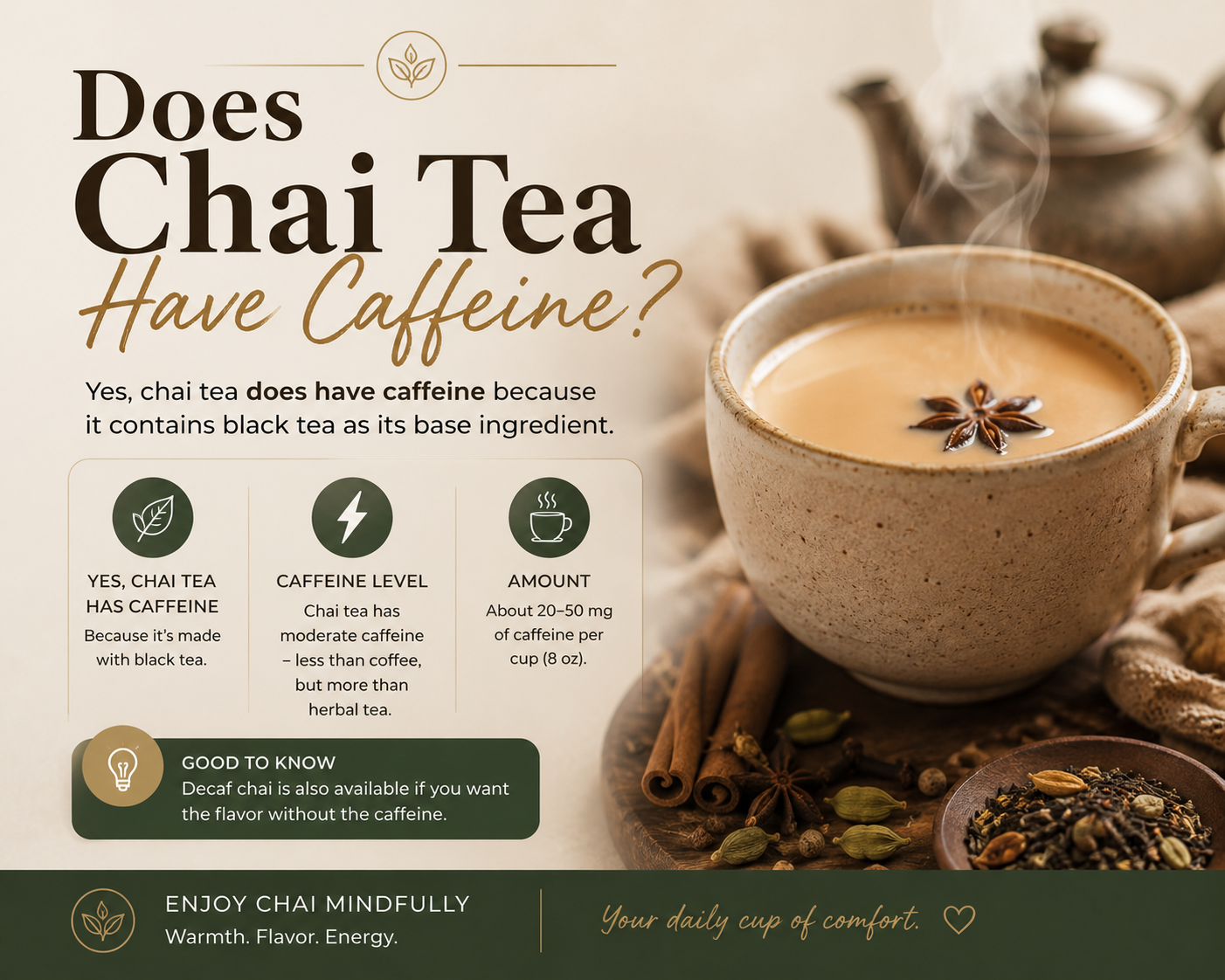
Yes, traditional chai tea does contain caffeine because it is usually made with black tea leaves, which naturally contain this stimulant. The caffeine in chai tea helps promote alertness and can provide a gentle energy boost, making it a popular choice for people who want an alternative to coffee. Since black tea is one of the main ingredients in most chai recipes, caffeine is present unless the product is specifically labeled as decaffeinated or caffeine-free.
However, the amount of caffeine can vary depending on the type of chai tea and how it is prepared. Homemade chai, chai tea bags, concentrated chai mixes, and chai lattes may all contain different caffeine levels. Some herbal chai blends replace black tea with herbs and spices, resulting in little to no caffeine. Therefore, while the answer to does chai tea have caffeine is generally yes, checking the ingredients is the best way to determine the exact caffeine content of a specific chai product.
How Much Caffeine Is in a Cup of Chai Tea?
A typical cup of chai tea contains about 25 to 60 milligrams of caffeine per 8-ounce serving, although this amount can vary depending on the strength of the tea and how it is prepared. Traditional homemade chai made with black tea usually falls on the lower end of the caffeine range, while chai lattes or concentrated chai mixes used in cafés may contain slightly higher levels. Compared to coffee, chai tea is generally milder, making it a preferred option for those who want a balanced energy boost without consuming too much caffeine.
Factors That Affect Caffeine Levels in Chai Tea
The caffeine content in chai tea is not fixed and can change depending on several important factors. One of the biggest influences is the type of tea used, since black tea naturally contains more caffeine than green or herbal teas. If a stronger black tea blend is used in chai preparation, the caffeine level will be higher, while lighter blends or shorter steeping times will result in a milder drink. Brewing time also plays a major role because the longer the tea is steeped, the more caffeine is extracted into the cup.
Another factor is how the chai is prepared and served. Homemade chai, café-style chai lattes, and instant chai mixes all have different caffeine concentrations. Serving size also matters, as larger cups naturally contain more caffeine than smaller servings. Even the ratio of milk to tea can slightly influence the final strength of the drink. Because of these variations, people often ask does chai tea have caffeine and find that the answer depends largely on preparation style rather than a fixed amount.
Chai Tea vs. Coffee: Which Has More Caffeine?
When comparing chai tea and coffee, coffee generally contains significantly more caffeine per serving. A standard cup of coffee usually has between 80 to 120 milligrams of caffeine, while chai tea typically contains around 25 to 60 milligrams. This means coffee provides a stronger and faster energy boost, which is why many people rely on it for intense alertness during busy mornings or long work hours.
Chai tea, on the other hand, offers a more balanced and smoother energy effect due to its lower caffeine content combined with calming spices like ginger and cardamom. This makes it a preferred choice for people who want steady energy without the jitters or sudden crashes often associated with coffee. So, while both drinks contain caffeine, the difference in strength is a key reason people often ask does chai tea have caffeine and how it compares to coffee in everyday use.
Health Benefits of Chai Tea Beyond Caffeine
Chai tea is not only valued for its caffeine content but also for the natural health benefits provided by its spices and tea base. Ingredients such as ginger, cinnamon, and cloves are rich in antioxidants, which help protect the body from oxidative stress. These compounds may also support overall wellness by reducing inflammation and promoting better immune function when consumed regularly as part of a balanced diet.
In addition to antioxidants, chai tea may support digestion and comfort. Ginger is widely known for its potential to ease nausea and improve digestion, while cinnamon has been studied for its possible role in supporting healthy blood sugar levels. Because of these added benefits, many people who ask does chai tea have caffeine are also interested in its broader health effects beyond just energy.
Can You Drink Chai Tea Every Day?
Chai tea can generally be enjoyed daily by most people, especially when consumed in moderate amounts. Since it contains less caffeine than coffee, it is often considered a gentler option for regular use. Many people drink one to two cups per day to enjoy its flavor, warmth, and mild energy boost without experiencing strong caffeine-related side effects. However, individual tolerance to caffeine can vary, so it is important to pay attention to how your body reacts.
For those sensitive to caffeine, timing and preparation matter. Drinking chai tea earlier in the day can help avoid sleep disturbances, while choosing lighter blends or smaller servings can further reduce caffeine intake. Some commercial chai drinks may also contain added sugar, so moderation is key for maintaining a healthy routine. This is why the question does chai tea have caffeine is often followed by concerns about how frequently it can be safely consumed.
Decaffeinated and Caffeine-Free Chai Options
For people who enjoy the taste of chai but want to avoid caffeine, there are several alternatives available. Decaffeinated chai tea is made using black tea leaves that have had most of their caffeine removed, offering a similar flavor with much lower stimulant effects. While not completely caffeine-free, it is a suitable option for those who are sensitive to caffeine but still want the traditional chai experience.
Another popular choice is herbal chai, which replaces black tea with caffeine-free ingredients while keeping the signature spice blend intact. These blends often include cinnamon, ginger, cardamom, cloves, and other herbs that deliver the same warm and aromatic flavor without any caffeine. This makes herbal chai ideal for evening consumption or for anyone who frequently asks does chai tea have caffeine and prefers a completely caffeine-free version.
Conclusion
Chai tea is a flavorful and comforting drink that does contain caffeine in most traditional versions because it is made with black tea. However, the caffeine content is generally lower than coffee, making it a popular choice for people who want a milder energy boost. The amount of caffeine can vary depending on preparation methods, serving size, and the type of chai used, which is why many people search for answers to does chai tea have caffeine before choosing their drink.
Overall, chai tea offers more than just caffeine—it also provides a rich blend of spices that may support digestion, immunity, and overall wellness. Whether enjoyed as a daily beverage or an occasional treat, chai tea remains a balanced option for both flavor and energy.
FAQs
1. Does chai tea have caffeine?
Yes, traditional chai tea usually contains caffeine because it is made with black tea leaves.
2. Is chai tea stronger than coffee?
No, coffee generally has much more caffeine than chai tea.
3. Can I drink chai tea at night?
Regular chai tea may affect sleep, but caffeine-free herbal chai is a better option at night.
4. Is all chai tea caffeinated?
No, some herbal or decaffeinated chai blends contain little to no caffeine.