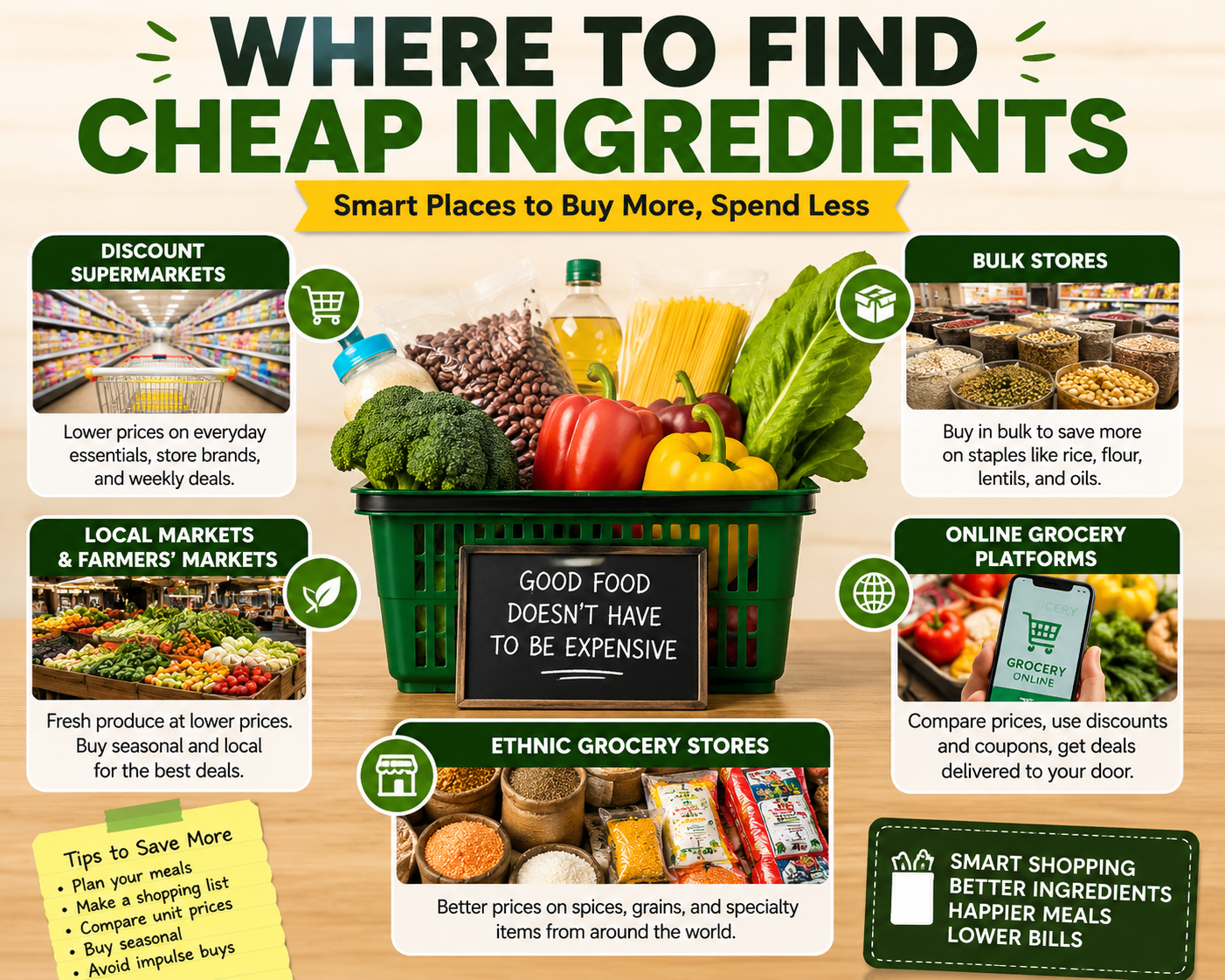
Why Finding Cheap Ingredients Matters
Learning where to find cheap ingredients is important because food expenses make up a large part of most household budgets. When people do not plan their grocery shopping carefully, they often end up paying much more for basic items like rice, flour, vegetables, and cooking oil. Over time, these small extra costs add up and can create financial pressure, especially for families, students, and individuals trying to manage limited income. Finding affordable ingredients helps maintain a balanced diet without sacrificing quality or nutrition.
Another important reason this matters is that cheap ingredients do not always mean low-quality food. Many supermarkets, local markets, and discount stores offer fresh and healthy options at lower prices simply because of bulk buying, seasonal availability, or store-brand pricing. By understanding these sources, shoppers can make smarter decisions, reduce waste, and still enjoy a variety of meals without overspending.
Discount Supermarkets for Everyday Savings
Discount supermarkets are one of the most reliable places when people search for where to find cheap ingredients on a regular basis. Stores like Aldi, Lidl, and Walmart focus on keeping prices low by offering store-brand products and reducing unnecessary costs in packaging and advertising. These supermarkets usually provide everyday essentials such as rice, pasta, bread, dairy products, and vegetables at significantly lower prices compared to premium grocery chains. For many households, this is the easiest way to maintain a steady food budget without changing eating habits.
Another advantage of discount supermarkets is consistency in savings. Unlike temporary sales or promotions, these stores offer permanently low prices, which makes planning weekly or monthly grocery shopping much easier. Many of them also run weekly deals on fresh produce and pantry items, allowing shoppers to save even more. By combining store-brand products with discounted items, customers can reduce their total grocery bill while still maintaining quality and variety in their meals.
Bulk Stores for Long-Term Budget Cooking
Bulk stores are a powerful option when exploring where to find cheap ingredients, especially for people who cook regularly or prepare meals in larger quantities. Stores like Costco or Sam’s Club allow customers to buy rice, flour, oil, lentils, and frozen foods in large packages, which reduces the overall cost per unit. This means that although the upfront cost may be higher, the long-term savings are significant because the ingredients last much longer and cost less per serving.
Another benefit of bulk shopping is reduced shopping frequency, which indirectly saves money by lowering impulse purchases. When essential ingredients are stocked in large quantities at home, there is less need for frequent supermarket visits where unnecessary items often get added to the cart. This method is especially useful for families or meal preppers who want to maintain a stable food supply while keeping their monthly grocery expenses under control.
Online Grocery Platforms Offering Discounts
Online grocery platforms have become an increasingly popular answer to where to find cheap ingredients, especially for people who want convenience along with savings. Many e-commerce grocery services offer competitive prices on pantry staples, packaged foods, and even fresh produce by reducing physical store costs. These platforms often run flash sales, discount codes, and bundle deals that help shoppers save more compared to traditional shopping methods. This makes online grocery shopping a practical choice for budget-conscious households.
Another key advantage of online grocery platforms is price comparison and transparency. Customers can quickly compare different brands, sizes, and prices without physically visiting multiple stores. Some platforms also offer subscription-based discounts or membership benefits that further reduce costs over time. By combining digital coupons with seasonal offers, shoppers can significantly lower their overall grocery expenses while enjoying the convenience of home delivery.
Local Farmers’ Markets and Fresh Deals
Local farmers’ markets are one of the best answers to where to find cheap ingredients, especially for fresh fruits, vegetables, and seasonal produce. Because these markets often sell directly from farmers to consumers, there are fewer middlemen involved, which usually results in lower prices. Shoppers can often find fresh, locally grown items that are not only cheaper but also fresher than supermarket options. This direct buying system helps both the farmer and the customer benefit from fair pricing.
Another advantage of farmers’ markets is flexibility in pricing and variety. Many sellers are open to negotiation, especially toward the end of the day when they want to clear their stock. This creates an opportunity for even greater savings on quality ingredients. In addition, seasonal availability means produce is at its cheapest when it is naturally abundant, allowing shoppers to plan meals around affordable, fresh ingredients while supporting local agriculture.
Ethnic Grocery Stores with Low-Cost Staples
Ethnic grocery stores are often overlooked but are a strong answer to where to find cheap ingredients, especially for pantry essentials like rice, lentils, spices, noodles, and cooking oils. These stores typically import or source products in bulk directly from suppliers, which helps keep prices lower than mainstream supermarkets. For example, South Asian, Middle Eastern, and Asian grocery stores often sell large bags of rice, flour, and beans at much better rates than branded supermarket versions, making them ideal for budget cooking.
Another advantage of ethnic grocery stores is the authenticity and variety of ingredients available at affordable prices. Many of these stores stock spices and specialty items that are both cheaper and more diverse than what is found in regular chains. This allows home cooks to prepare a wide range of international dishes without spending extra money. For families who cook traditional meals, these stores often become the most cost-effective and reliable shopping option.
Seasonal Shopping for Maximum Savings
Seasonal shopping plays a major role in reducing food costs and is a practical strategy when learning where to find cheap ingredients. Fruits and vegetables are significantly cheaper when they are in season because they are widely available and require less transportation or storage costs. For example, buying mangoes in summer or citrus fruits in winter ensures better prices and higher freshness compared to off-season purchases, which are usually more expensive.
Another benefit of seasonal shopping is better quality and nutrition. Produce that is harvested at the right time is often more flavorful and nutrient-rich. By planning meals around seasonal availability, shoppers can naturally lower their grocery bills while enjoying fresher ingredients. This habit also encourages variety in diet throughout the year, helping people eat healthier without increasing their food budget.
Smart Budget Strategies to Cut Grocery Costs
Smart budgeting strategies are essential when deciding where to find cheap ingredients, because even the best stores cannot help if shopping habits are not controlled. One of the most effective methods is planning meals in advance and creating a strict shopping list before going to the store. This reduces impulse buying and ensures that only necessary ingredients are purchased. Comparing unit prices, choosing store brands, and avoiding processed foods also significantly reduce total grocery expenses over time.
Another important strategy is combining multiple saving methods together for maximum impact. For example, shoppers can buy bulk staples from warehouse stores, fresh produce from local markets, and discounted items from supermarkets. Using coupons, seasonal deals, and loyalty programs further increases savings. When these habits become consistent, households can reduce their food budget significantly while still maintaining a healthy and balanced diet.
Conclusion
In conclusion, understanding where to find cheap ingredients is one of the most effective ways to control food expenses without compromising on quality or nutrition. From discount supermarkets and bulk stores to local farmers’ markets, ethnic grocery shops, and seasonal buying, each option offers unique opportunities to save money. When combined with smart budgeting strategies, these methods help create a sustainable and affordable way of cooking that fits almost any lifestyle or income level.
FAQs
1. What is the cheapest place to buy ingredients?
Discount supermarkets like Aldi and Walmart are generally among the cheapest for everyday groceries.
2. Are bulk stores really cheaper?
Yes, bulk stores reduce the cost per unit, making them cheaper in the long run.
3. Is it cheaper to buy from local markets?
Often yes, especially for fresh and seasonal fruits and vegetables.
4. How can I save money on groceries easily?
Plan meals, use store brands, buy seasonal produce, and shop in bulk when possible.