Why Slow Cooker Recipes Often Go Wrong
Slow cooker recipes often fail because people assume they work exactly like stovetop or oven cooking, but the process is very different. A slow cooker traps heat and moisture inside a sealed environment, which means very little liquid evaporates during cooking. Because of this, even a small mistake in ingredient balance can completely change the final result. Many home cooks also use recipes that were not originally designed for slow cooking, leading to issues like watery sauces, overcooked vegetables, or uneven textures. Another common reason is incorrect expectations—slow cookers are great for tender, slow-braised meals, but they cannot create crispy textures or strong caramelization. When these differences are not understood, recipes often turn out disappointing, even if the ingredients are correct.
Too Much Liquid: The Most Common Problem
One of the biggest mistakes when learning how to fix slow cooker recipes is adding too much liquid. Unlike stovetop cooking, a slow cooker does not allow water or broth to evaporate, so everything stays trapped inside the pot. This often leads to soups, stews, and sauces becoming overly watery and lacking the rich, thick consistency people expect. Even ingredients like vegetables and meat release natural juices during cooking, which increases the total liquid level even more.
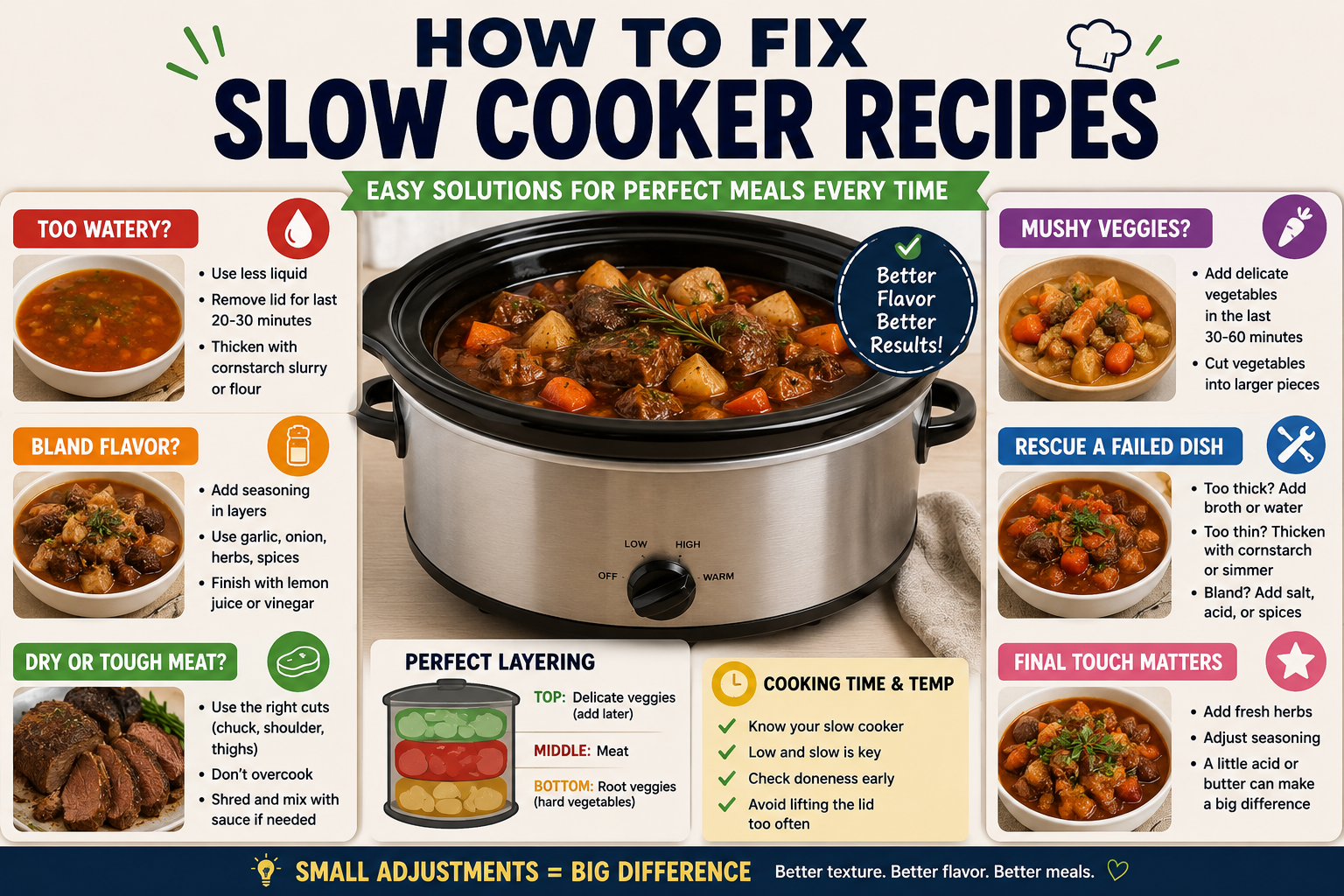
To fix this issue, it is important to reduce liquid from the start and adjust recipes properly for slow cooking. A good rule is to use about 30–50% less liquid than you would in a regular recipe. You can also thicken the dish at the end using cornstarch, flour slurry, or by removing the lid for the last 20–30 minutes of cooking. These simple adjustments help bring back balance and make the dish much more flavorful and well-textured.
Bland Flavor and How to Fix It
Bland flavor is a very common issue in slow cooker meals because long cooking times tend to soften and mute spices, herbs, and seasoning intensity. As ingredients cook slowly over several hours, the flavors blend together so much that they can lose their sharpness or freshness, leaving the dish tasting flat or dull. This often happens when people add all seasoning at the beginning but never adjust it at the end, assuming the slow cooker will automatically intensify taste, which it does not.
To fix bland flavor, it is important to layer seasoning at different stages of cooking instead of adding everything at once. Adding salt, herbs, or spices near the end of cooking can significantly improve taste. Fresh ingredients like lemon juice, vinegar, garlic, or fresh herbs also help brighten the dish and restore balance. A final taste check before serving is essential, as slow cooker dishes almost always need a last-minute flavor boost to reach their full potential.
Tough or Dry Meat in Slow Cookers
Tough or dry meat is another frequent problem when trying to understand how to fix slow cooker recipes, and it usually happens because the wrong cut of meat is used or the cooking time is not properly adjusted. Lean meats like chicken breast or low-fat beef can easily become dry after hours of slow cooking because they lack enough fat and connective tissue to stay moist. On the other hand, slow cookers are actually designed to break down tougher cuts of meat, but only when the correct timing and temperature are used.
To fix this issue, it is best to choose cuts like beef chuck, pork shoulder, or chicken thighs, which contain more fat and collagen that melt during slow cooking. Another important step is avoiding overcooking—many people leave meat in the slow cooker for too long, which removes moisture instead of locking it in. Checking doneness early and using a thermometer when possible can help prevent dryness and ensure tender, juicy results every time.
Mushy Vegetables and Timing Mistakes
Mushy vegetables are a very common problem in slow cooker meals because not all vegetables are meant to cook for several hours at low heat. Soft vegetables like zucchini, peas, spinach, and mushrooms break down quickly in a slow cooker and can turn into a soggy texture if added too early. Even firmer vegetables like potatoes and carrots can become overly soft if they are cut too small or cooked for too long, which affects the overall structure and presentation of the dish.
To fix this issue, timing is the most important factor. Dense vegetables such as carrots, potatoes, and turnips should be added at the bottom of the slow cooker where the heat is strongest, while delicate vegetables should be added during the last 30–60 minutes of cooking. This simple adjustment helps maintain texture and prevents the dish from becoming overly soft or unappetizing. Proper vegetable timing is a key part of mastering how to fix slow cooker recipes successfully.
Cooking Time and Temperature Issues
Cooking time and temperature mistakes are another major reason slow cooker recipes fail, because many people assume all slow cookers work the same way, which is not true. Some models run hotter on the “low” setting than others, and even small differences can lead to overcooked or undercooked food. Leaving food in too long can make meats dry and vegetables mushy, while not cooking it long enough can result in tough meat and underdeveloped flavors.
To fix this, it is important to understand your specific slow cooker and adjust cooking times accordingly. Most recipes offer a range (such as 6–8 hours on low), but checking food earlier than expected helps prevent overcooking. Also, avoid constantly opening the lid, as this releases heat and increases cooking time. Managing time and temperature correctly is essential for getting consistent results when learning how to fix slow cooker recipes.
Layering Ingredients for Perfect Results
Layering ingredients correctly is a simple but powerful step that can completely improve slow cooker results, yet it is often overlooked when people are trying to understand how to fix slow cooker recipes. The order in which ingredients are placed affects how evenly everything cooks because heat distribution inside a slow cooker is not the same throughout the pot. Dense ingredients like potatoes, carrots, and root vegetables need to be placed at the bottom where the heat is strongest, while meat should usually go in the middle so it cooks evenly and absorbs flavor from surrounding ingredients. Delicate ingredients such as leafy greens, herbs, or quick-cooking vegetables should always be placed on top or added near the end to prevent overcooking.
Proper layering also helps maintain texture and prevents ingredients from breaking down too quickly. When everything is mixed randomly, softer ingredients can turn mushy while harder ones may remain undercooked. By following a structured layering approach, the heat circulates more effectively, and each ingredient cooks at the right speed. This small adjustment significantly improves consistency and ensures that every bite has balanced flavor and texture, making your slow cooker meals more reliable and satisfying.
How to Rescue a Failed Slow Cooker Dish
Even when a slow cooker recipe doesn’t turn out as expected, it can often still be fixed with a few smart adjustments. If the dish is too watery, you can thicken it using cornstarch slurry, mashed potatoes, or by simmering it uncovered on the stove for a short time. If the flavor is weak, adding salt, spices, or a splash of acid like lemon juice or vinegar can quickly bring it back to life. In cases where meat is slightly dry, shredding it and mixing it with sauce can help restore moisture and improve texture, making the dish more enjoyable.
Rescuing a failed dish is an important part of mastering how to fix slow cooker recipes, because not every meal will be perfect on the first try. Many professional cooks rely on finishing touches outside the slow cooker, such as fresh herbs, butter, or seasoning adjustments, to elevate the final result. Instead of throwing the meal away, small corrections can transform it into something flavorful and balanced, saving both time and ingredients.
Conclusion & FAQs
Mastering how to fix slow cooker recipes is all about understanding how slow cooking really works and making small but important adjustments. Most common problems—like watery sauces, bland flavors, dry meat, or mushy vegetables—are not failures of the recipe itself but rather signs that timing, liquid balance, or ingredient layering needs improvement. Once these basics are corrected, slow cooker meals become consistently flavorful, tender, and easy to prepare without much effort.
The key takeaway is that slow cookers reward patience and precision. Reducing excess liquid, choosing the right cuts of meat, layering ingredients properly, and adjusting seasoning at the end can completely transform your results. With practice, you can turn even basic recipes into rich, comforting meals that taste like they were carefully slow-braised all day.
FAQs
1. Why do my slow cooker meals turn watery?
Because slow cookers trap steam and do not allow evaporation, so too much liquid builds up during cooking.
2. How do I make slow cooker food more flavorful?
Add seasoning in layers and finish with fresh herbs, lemon juice, or vinegar before serving.
3. What meat works best in a slow cooker?
Tough, fatty cuts like beef chuck, pork shoulder, and chicken thighs work best because they stay tender.
4. Can I fix a ruined slow cooker recipe?
Yes, most dishes can be rescued by adjusting thickness, seasoning, or texture after cooking.